


IMMERSIVE AUDIO
What is Immersive Audio?
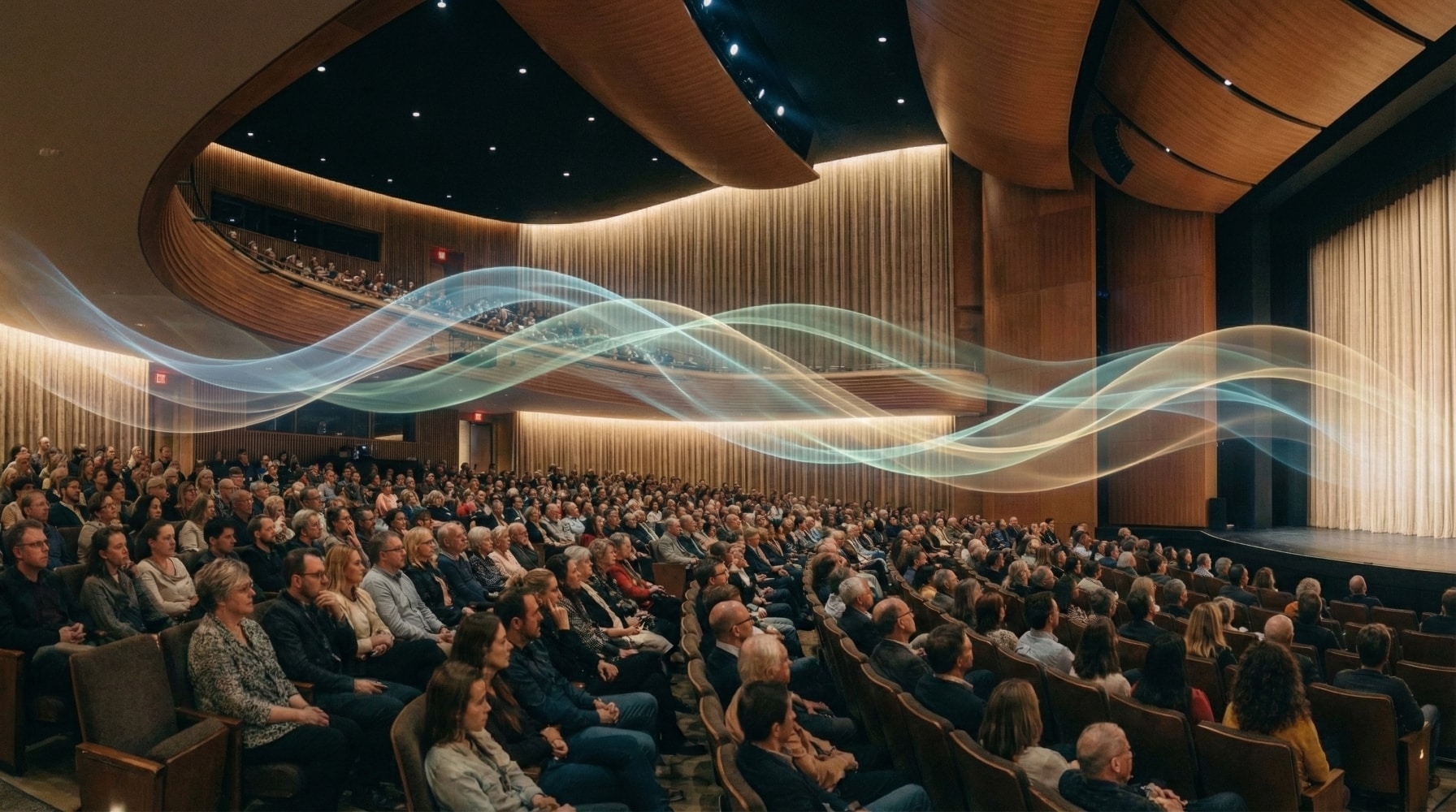
Immersive Audio describes sound experiences in which listeners feel fully surrounded and engaged by sound. Rather than focusing on individual loudspeakers or technologies, immersive audio is about how sound is perceived within a space.
Immersive Audio is about shaping the soundscape of a space – through both the acoustic character of the room and the way sound behaves within it.
In the audio world, terminology can be confusing. Terms such as immersive audio, spatial audio, 3D sound, surround sound and active acoustics are often used interchangeably. While these concepts are related, they describe different aspects of how sound behaves and how it is experienced.
At SIAP, Immersive Audio is understood as the overall listening experience, shaped by both the acoustic character of a space and by the way sound sources (in spatial audio these are usually called, audio objects) are placed and behave within that space.
Immersive Audio as an Experience
Unlike approaches that focus purely on sound localisation or technical formats, Immersive Audio emphasises envelopment, coherence and engagement. The goal is not to make the listener aware of technology, but to draw them naturally into the sound environment.
An immersive experience can be subtle or dramatic. It may support clarity and intimacy for speech, richness and depth for music, or complete sonic immersion for storytelling and performance. What defines immersive audio is not complexity, but how convincingly sound supports what is happening in the space.
A Concept with a Long History
Although immersive audio is often seen as a modern development, the underlying idea is not new.
As early as the 1960s, composer and researcher R. Murray Schafer introduced the concept of the soundscape: the way humans perceive and experience sound within an environment. This thinking later formed the basis of the international ISO 12913 Soundscape standard, which describes sound as the interaction between sound sources, the environment, and the listener.
This perspective aligns closely with how immersive audio is understood today: not as a technical effect, but as a relationship between sound, space and perception.
The Role of the Acoustic Environment
Every space has its own acoustic character. Size, shape and materials determine how sound reflects, decays and surrounds the listener.
In some venues, natural acoustics already provide richness and envelopment. In others, the space is intentionally acoustically neutral/dry, allowing it to support a wide range of different performances.
Where appropriate, the acoustic character of a space can be shaped or defined electronically, enabling greater flexibility without physical changes. In combination with spatial sound techniques, this can contribute to a richer overall immersive audio experience – but it is not a prerequisite.
Immersive Audio can involve different approaches to shaping or defining the acoustic environment, depending on the space and the intended use.
→ Read more about Active Acoustics
→ Read more about Virtual Acoustics
Spatial audio - Sound Behaviour Within the Space
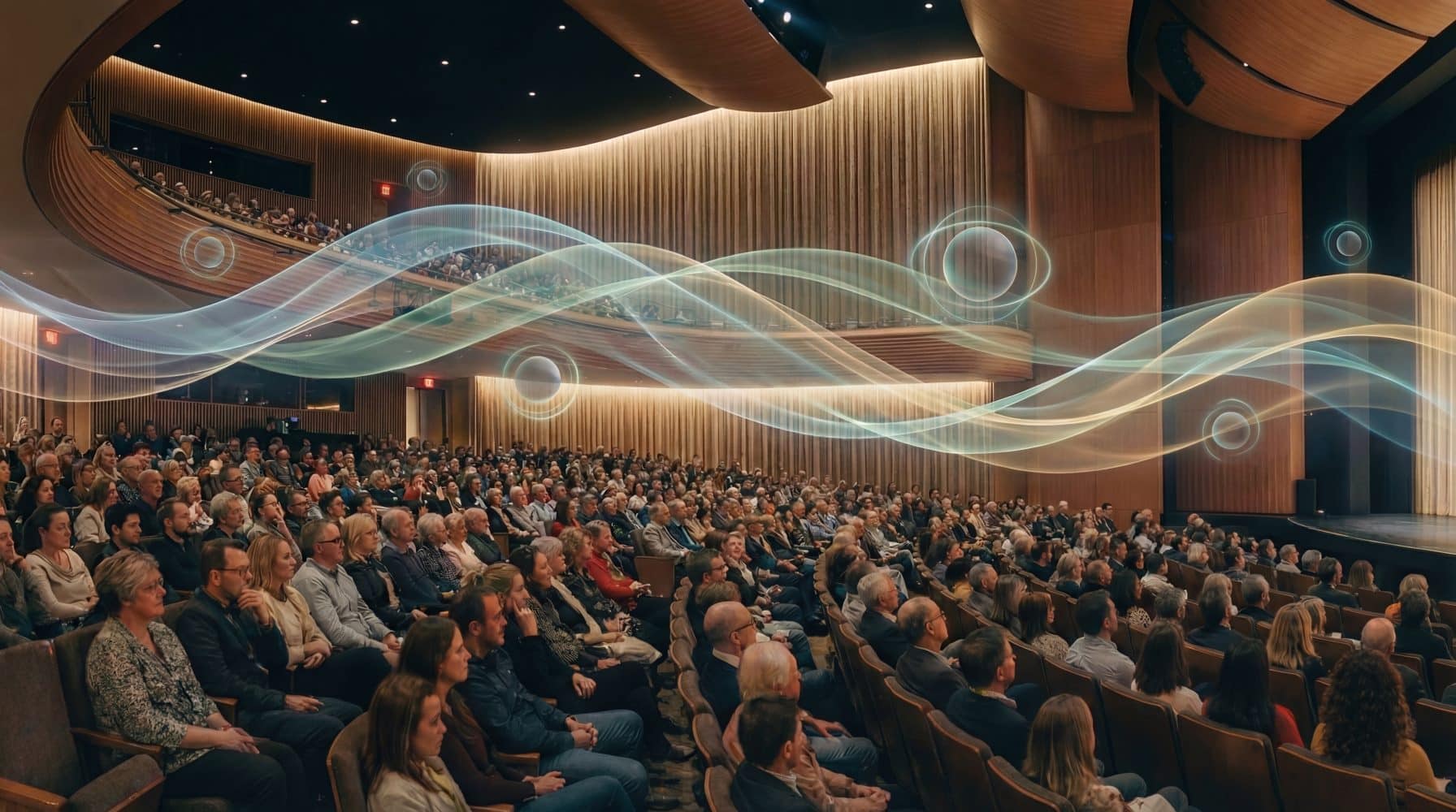
In addition to how a space sounds, immersive audio also concerns how individual sounds behave within that space.
Rather than being fixed to specific loudspeakers, sound can be positioned, moved and shaped in three dimensions. This allows sound events to originate from meaningful locations, follow trajectories, or envelop the audience in a natural and expressive way.
When integrated with the acoustic environment, this approach creates sound scenes that feel coherent, believable and emotionally engaging.
Experience and Purpose
Immersive Audio is ultimately defined by the experience it creates.
A successful immersive system supports the purpose of the space without drawing attention to itself. It enhances understanding, emotion and engagement, while remaining intuitive for performers, operators and audiences alike.
This balance between experience and function is what allows immersive audio to work in real venues, not just in controlled or experimental settings.
Applications of Immersive Audio
Immersive Audio is used in theatres, concert halls, cultural venues, museums, conference spaces and multipurpose buildings. In each case, the goal is the same: to create sound environments that feel right for the moment and appropriate for the content.
Whether supporting speech, music or performance, immersive audio allows spaces to adapt and respond to what is happening within them.
Learn More
For readers interested in deeper technical background, SIAP provides detailed documentation:
These documents explore system design and underlying principles in more detail, while the concept of Immersive Audio itself remains rooted in listening experience rather than technical specification.
Contact us today to learn how SIAP can transform your space.
NEWSLETTER
Subscribe to our newsletter for exclusive insights into our latest projects, acoustic innovations, and upcoming events! Be the first to hear about demonstration opportunities, from intimate spaces to large venues, where you can experience the SIAP difference firsthand. Join our community today and stay connected with everything happening at SIAP!


